The Homeland E Waste Process Flow
Homeland E-Waste Management follow a systematic and eco-friendly approach to manage electronic waste responsibly. Our process ensures that every collected device is handled with care to reduce environmental harm and promote sustainable recycling. Each stage of the process is designed to maximize value while minimizing waste, from collection to segregation.
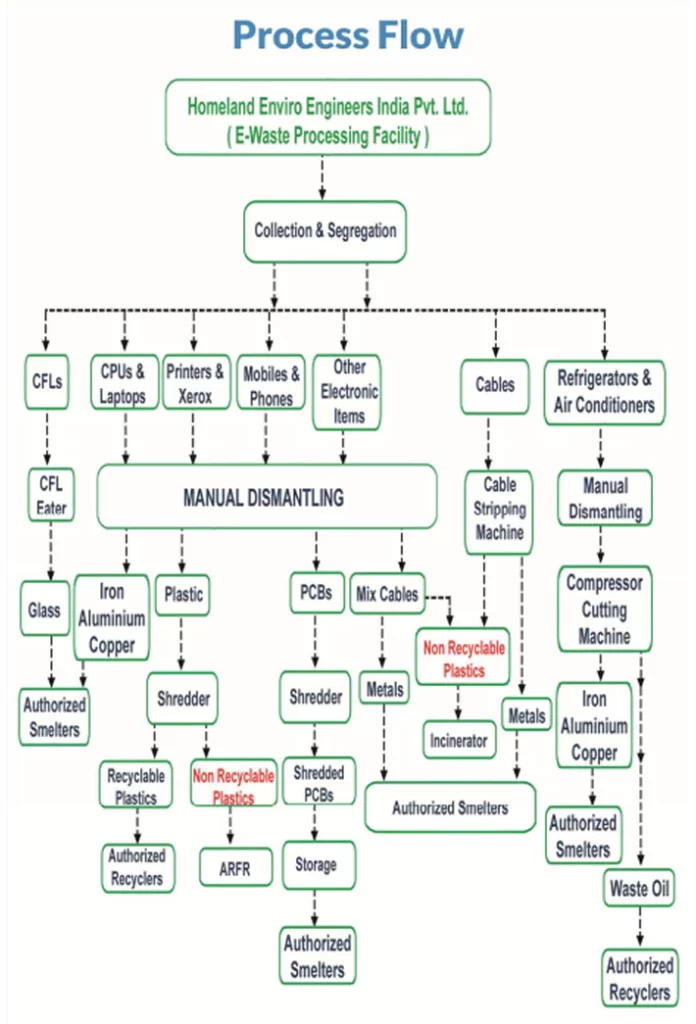
The process begins with the collection and transportation of e-waste from homes, offices and industries to our authorized centers. The materials are then sorted and dismantled to separate reusable parts, which are refurbished or resold. After shredding and material recovery, valuable metals like copper, aluminum, and gold are extracted from the remaining components. Non-recyclable and hazardous waste is safely treated and disposed of in compliance with environmental standards. Through this structured E-Waste Process Flow, Homeland converts waste into valuable resources, supporting sustainability, resource conservation and a cleaner, greener future for the planet.
Frequently Asked Questions
What is the e-waste recycling process at Homeland Enviro?
Homeland Enviro follows a structured e-waste recycling process that includes collection, transportation, segregation, dismantling, shredding, material recovery, and appropriate treatment or disposal of residual waste. This process helps recover valuable materials and reduce the environmental impact of discarded electronics.
What are the main stages of electronic waste management?
The main stages of electronic waste management include collection, transportation, sorting, dismantling, material separation, recycling, resource recovery, and safe disposal of non-recyclable residues. Each stage helps ensure that electronic waste is handled responsibly.
What happens to electronic waste after collection?
After collection, electronic waste is transported to a processing facility, where it is sorted by product and material type. Suitable devices and components may be separated for reuse or refurbishment, while other materials are dismantled and processed for recycling.
Why is segregation important in e-waste recycling?
Segregation separates electronic waste into categories such as metals, plastics, circuit boards, glass, and batteries. This helps improve recycling efficiency, recover valuable materials, prevent cross-contamination, and identify components that require specialized handling.
How does Homeland Enviro dismantle electronic waste?
Homeland Enviro uses a systematic dismantling process to separate electronic components, cables, circuit boards, plastics, and metals. Manual dismantling helps identify reusable parts and materials that require appropriate treatment or further processing.
Which valuable materials can be recovered from electronic waste?
Electronic waste can contain valuable materials such as copper, aluminium, gold, and other metals. Recycling can also recover suitable plastics and reusable components, helping conserve natural resources and reduce dependence on newly extracted raw materials.
How does shredding help in the e-waste recycling process?
Shredding reduces suitable electronic waste into smaller pieces, making it easier to separate and recover different materials. When used as part of a controlled processing system, it supports efficient resource recovery and helps prepare materials for further recycling.
How are hazardous materials handled during e-waste recycling?
Hazardous components must be identified, separated, and handled using appropriate safety procedures. Non-recyclable and hazardous residues should be treated or disposed of through suitable channels in accordance with applicable environmental requirements to minimize risks to people and the environment.
How does the e-waste recycling process help protect the environment?
Responsible e-waste recycling reduces improper dumping, supports material recovery, conserves natural resources, and helps prevent hazardous substances from contaminating soil and water. It also encourages reuse and recycling instead of sending recoverable materials to landfill.
How can businesses arrange e-waste collection and recycling with Homeland Enviro?
Businesses can contact Homeland Enviro Engineers India Pvt. Ltd. to discuss electronic waste collection, transportation, processing, and recycling requirements. Provide your location, waste categories, and estimated quantity to confirm service availability and collection arrangements. The company is based in Kadapa, Andhra Pradesh.

